
Your forehead breaks out more than your cheeks because the skin there sits in the T-zone, where oil glands run larger and sit closer together than almost anywhere else on your face. Pile on sweat, a hat, and hair brushing the hairline, and the forehead turns into the busiest patch of skin you own. We're about three weeks out from the first Launch 2.0 drop on November 1st, so I've had foreheads on the brain.
Why does the forehead get oilier than the cheeks?
Because it has more oil glands, and bigger ones. The forehead, nose, and chin make up the T-zone — the strip of skin with the heaviest concentration of oil glands on the face. Your cheeks have far fewer, which is why they can feel dry while your forehead is shining by lunchtime.
More oil means more chances for a pore to get blocked and for a bump to form. It isn't that your cheeks are better behaved. They just aren't working as hard.

Does sweat make forehead breakouts worse?
It can, mostly because of where it ends up. Sweat on its own isn't dirty, but it mixes with oil, sunscreen, and whatever else is on your skin, and the forehead is where it pools first.
I'm a gym guy and a Sunday runner, so I've watched this happen on my own face. A cap or a headband traps that mix against the hairline for an hour, and the forehead is usually the first place I notice a new bump a couple of days later. The move isn't to sweat less — it's to not let it sit. A quick rinse after a workout does more than any fancy extra step.
Is it the oil, the sweat, or something touching your skin?
Usually a mix of all three. Oil is the baseline, sweat is the accelerant, and friction is the part people forget.
Hats, helmets, headbands, and bangs all press against the forehead and hairline, and that contact plus trapped heat is a classic setup for bumps right along the hat line. If your breakouts live exactly where something rests, that's your clue.
What actually helps a forehead breakout?
Keep it clean, keep your fingers off it, and cover the ones that have come to a head. Washing after you sweat and swapping to a clean hat or headband takes most of the pressure off on its own.
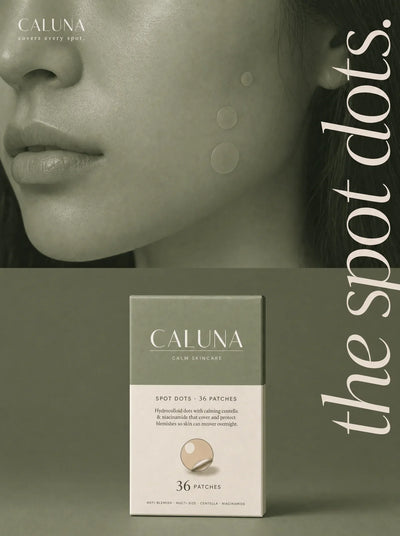
For a single raised spot that's come to a head, a hydrocolloid patch is my go-to — it's known for drawing the fluid out of a bump, keeping the spot covered and protected, and, honestly, stopping me from picking at it at a red light. That's what our Spot Dots are for, and they're the first thing I reach for.
When should you see a dermatologist?
If the bumps are painful, deep, or just won't quit, go see one. A patch and a clean hat handle the everyday stuff, not the stubborn stuff.
One more thing worth knowing: not every forehead bump is acne. Small, itchy, look-alike bumps along the hairline can be folliculitis — sometimes the fungal kind — and that's a different situation a dermatologist should look at rather than something you cover and hope. I'm a plumber, not a doctor, so take that as a nudge to get it checked, not as advice.
What's coming for foreheads?
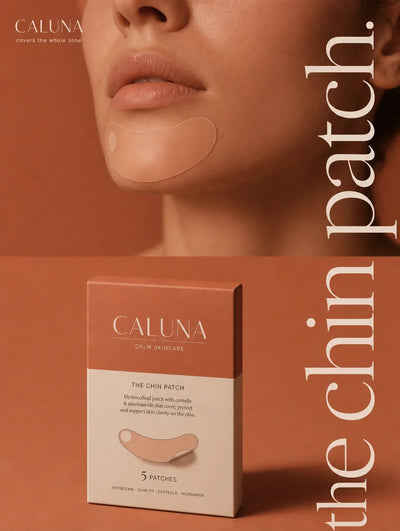
A patch built for exactly this spot. The Forehead Patch is coming in November — join the forehead list — one single wide patch that covers the whole area instead of dotting six little circles across your hairline. It'll use a simplified hydrocolloid formula, with the final ingredient list published at launch.
Race update: nose 3 · forehead 2 · chin 1 · kids 1. The zone with the most names launches first on November 1st — pick yours.
— Jake, founder of Caluna.