
When you've got a cold or bad allergies, your nose breaks out mostly from friction — the constant wiping, blowing, and tissue-rubbing irritates thin nose skin and traps oil and bacteria right where your hands keep landing. It's not the virus itself planting pimples; it's everything the cold makes you do to your nose all day. We're about three and a half weeks out from our November launch over here, and with the nose quietly leading the zone race, this felt like the right week for it — cold season's arriving.
Why does your nose break out when you have a cold?
Friction and moisture. Blowing and wiping dozens of times a day drags rough tissue across the delicate skin around your nostrils, wears down its protective barrier, and leaves it raw and prone to clogged pores and small breakouts along the sides and base of the nose. The spot that's taking the most abuse is usually the spot that breaks out.
Is it the cold itself or the tissues doing it?
Mostly the tissues and your hands. The virus doesn't cause pimples directly, but repeated rubbing, plus the damp, salty environment under a running nose, creates exactly the irritation and clogging that lead to breakouts. Think of it as a friction problem that happens to arrive with every cold.

Why does the skin under your nose get so raw?
Dry paper tissues, salty mucus, and constant wiping break down the skin barrier faster than it can repair. Once that barrier is down, the area turns red, flaky, and tender, and skin in that state clogs and breaks out more easily than usual. It'll calm down once you stop scrubbing it.
How do you keep your nose clearer through a cold?
The whole game is less friction and a protected barrier. None of this is fancy, but it's what actually helps:
- Switch to soft, lotion-infused tissues or a damp soft cloth, and pat instead of scrubbing.
- Dab a plain, non-comedogenic moisturizer or a thin ointment under your nose to shield the skin between blows.
- Wash your hands before touching your face — when you're sick, you're touching your nose far more than you realize.
- Swap pillowcases often; they collect a lot when you're ill.
- Leave any spot that forms alone. Raw, worn skin scars more easily, so picking costs you more than usual.
Where do pimple patches fit in?
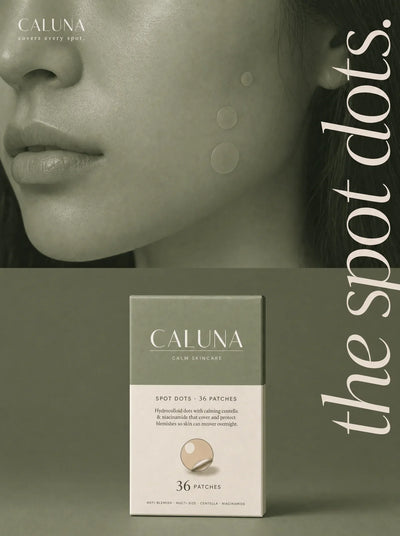
Once an actual spot forms, a hydrocolloid patch is known for covering it, soaking up the fluid, and keeping your fingers — and the next tissue — off it. That barrier matters most when the surrounding skin is already raw. Our Spot Dots cover a single spot now; they're the little invisible dots, available today.
Flat round dots don't love the curve and sides of the nose, though, which is exactly why the Nose Patch is coming in November — join the nose list. It's one T-shaped patch shaped for the bridge and the sides, with a simplified hydrocolloid formula — final ingredient list published at launch.
When should you see a doctor?
If the skin under your nose stays cracked, crusted, or painful, if redness spreads, or if breakouts are deep and won't settle after the cold passes, check in with a dermatologist or your doctor. Raw, broken skin can get infected, and that's worth a real look rather than another product.
Race update: nose 3 · chin 1 · forehead 1 · kids 1. The zone with the most names launches first on November 1st — pick yours.
— Jake, founder of Caluna.